Manuel Rodríguez Patriotic Front
My Tender MatadorThe Manuel Rodríguez Patriotic Front is an armed opposition organization whose campaign against Augusto Pinochet places the Queen of the Corner in the path of state repression. Its ambush of the presidential motorcade is a central political turning point, but the Front’s significance also lies in the less visible work surrounding that action: clandestine meetings, the movement of a heavy package through a crackdown, and the use of the Queen’s home as refuge. The organization’s need for secrecy draws her into danger, while its later order that she leave Santiago exposes the personal cost of the protection it offers.
A clandestine presence in the Queen’s life
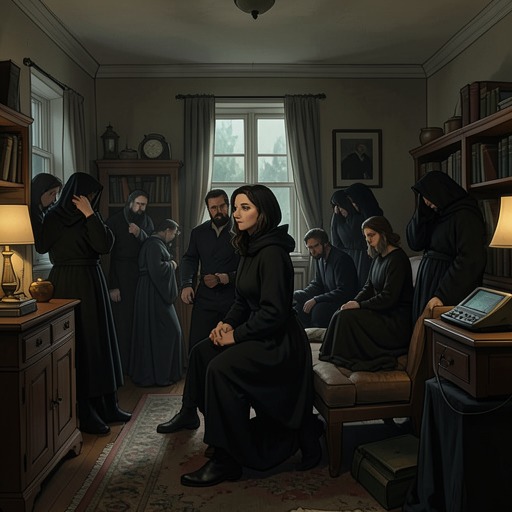
The Front enters the Queen’s story through her attachment to Carlos, who takes part in long meetings at her home. While he and his associates meet, she stays awake, makes coffee, and keeps watch over the hours around them. Her care for Carlos is personal and unreturned, but it also gives the organization access to a place where it can gather. Her home is not simply a backdrop to the political plot: the Front’s presence there makes the Queen vulnerable once the authorities begin searching for those responsible for the attack.
The Queen’s involvement also extends beyond shelter. During a demonstration and its violent dispersal, she carries a heavy package for Carlos through tear gas and a crowd fleeing police. When it slips under a bus seat, a student points it out, allowing her to retrieve it. She continues through the unrest and delivers it to a man waiting outside a shop at noon. The scene shows how an operation can depend on a civilian courier whose connection to the Front is not apparent to those around her. The Queen undertakes the task because of her devotion to Carlos, not because the organization has made her a trusted political insider.
The motorcade ambush
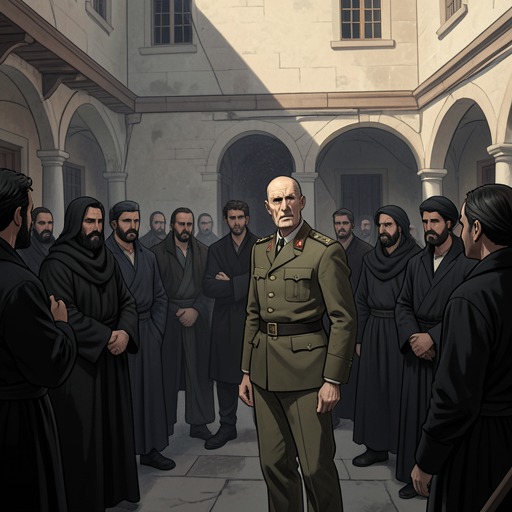
On September 11, the Front’s armed action confronts the presidential motorcade on the road back to Santiago. Augusto Pinochet has insisted on taking the route despite security officials’ concerns about a possible attack. Near the Achupallas grade, the lead vehicle brakes to avoid a trailer blocking the road. The cars swerve, and gunfire begins from the heights; a rocket strikes the first vehicle. Pinochet takes cover in the Mercedes-Benz as the guards, caught off guard, struggle to respond.
The attack is a serious challenge to the security surrounding the dictator, but it does not kill him. Reports heard later by the Queen say that Pinochet survived without a scratch and that seven bodyguards were killed. The contrast between the Front’s capacity to strike and its failure to reach its principal target shapes the aftermath: the regime remains in power, while the attack brings intensified searches and danger to people and places associated with the organization.
Escape, repression, and exposure
The Front’s escape becomes part of the story through reports circulating among passengers on a bus. The Queen hears that the attackers got away, and an older woman tells her that none was captured. Later, Doña Catita recounts that the Front’s members escaped by putting sirens on their cars and passing themselves off as government forces. In her account, they went past police and guards without being arrested. This explanation is reported as a character’s account rather than independently verified narration, but it underscores the operation’s reliance on disguise, confusion, and the security forces’ inability to identify the attackers in the immediate aftermath.
The regime responds with public warnings, searches, and a demand that citizens remain at home and report anything suspicious. The Front’s success in evading capture does not keep its wider network safe. Laura tells the Queen that the other safe houses have been searched and that the secret police are expected at the Queen’s home within hours. She insists that leaving Santiago is a matter of life and death: if another person is caught, the others may be caught as well. The Queen resists at first because leaving means giving up her house and the life she has built there. She finally obeys because she trusts Carlos’s warning that the authorities will be especially brutal toward her.
Protection and unequal trust
The Front’s relationship with the Queen is protective but not fully reciprocal. Laura arranges her removal from the city and says the safe houses have been compromised, yet the decision is presented as an order, not an invitation. The Queen is not told she can stay and choose her own risk; she is told she must go for her safety and the safety of others. Her home has served the organization, but once it is exposed, preserving the network requires her to abandon it.
When Carlos later meets her, he says the Front is protecting her and gives her money for lodging and expenses for several months, until the situation settles and she can return to Santiago. The Queen challenges the gesture, asking whether the organization is protecting her or itself and pointing out that its members have not always trusted her. Carlos acknowledges that this may also be true, while insisting that the Front is grateful for her cooperation. The exchange distinguishes gratitude from intimacy: she has risked much for Carlos and his associates, but their political relationship remains cautious and instrumental. His thanks and tenderness do not undo the fact that the Queen’s devotion exceeds what the Front can return.
Narrative significance
The Front’s actions connect political violence to the ordinary objects and obligations of the Queen’s life: a house, a package, a radio, and the belongings she must sort when ordered to leave. As reports of searches and the failed attempt on Pinochet’s life come through her radio, national events become immediate threats to her home and freedom of movement. The organization is therefore present not only in the armed action but in its consequences: secrecy brings the Queen into danger, escape does not prevent the crackdown, and protection comes at the price of exile from the place she has made her own.
The novel also places the Front’s disciplined clandestine world beside the Queen’s exposure to public harassment and her precarious life on the city’s margins. She is able to move through a police line and use her quick wit to avoid a search, but that resourcefulness cannot make her secure once the authorities identify her home as a possible refuge. The Front’s struggle against the dictatorship and the Queen’s struggle to preserve a home and a beloved relationship intersect without becoming the same struggle. Her assistance matters to the organization, yet the eventual separation from Carlos makes clear that political necessity governs the terms of their connection.